Banda Diving on a Spice Islands Yacht Charter: Exploring Volcanic Reefs and Endemic Marine Life
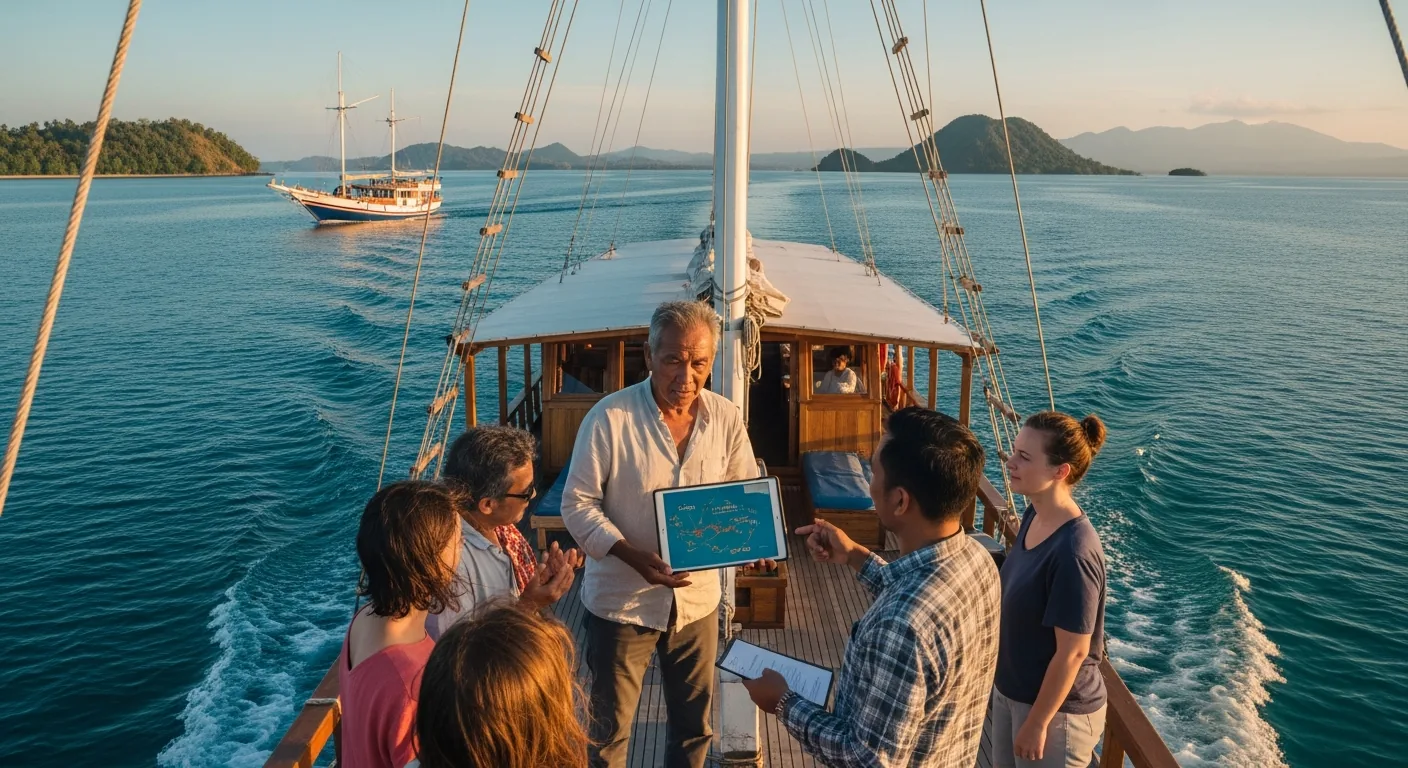
The pre-dawn air hangs heavy and still, thick with the scent of clove and damp earth. On the horizon, the conical silhouette of Gunung Api volcano materializes against a wash of indigo and ochre. The deep, impossibly blue water of the Banda Sea slicks past the hull of the phinisi, a placid surface that belies the geologic drama unfolding below. This is the entry point to a realm few divers will ever witness, a confluence of tectonic power, colonial history, and explosive biodiversity. For the discerning traveler, the challenge is not merely reaching this remote archipelago in Maluku, but in accessing its secrets with the nuance and depth they command. See also: book Contact.
The modern adventurer seeks more than just a dive log entry; they seek a narrative. The problem is that destinations offering this potent combination of raw nature and profound history are often logistically prohibitive or have compromised their integrity. The Banda Islands remain an exception, but their premier underwater sites are scattered, subject to powerful currents, and largely inaccessible without a dedicated, sea-worthy vessel. A land-based holiday cannot comprehend the scale of this place. The solution lies in a private expedition, a meticulously planned spice islands phinisi charter that unlocks the volcanic walls, pelagic-rich channels, and forgotten corners of this historic trade route.
The Geological Anomaly: Why Volcanic Diving in Banda Maluku is a Class Apart
The underwater topography of the Banda Islands is a direct expression of their violent geological origins. The islands form the inner arc of the Banda Arc, a 180-degree curve of volcanic activity created by the collision of the Indo-Australian and Eurasian tectonic plates. This is one of the most geologically complex and active regions on the planet. For divers, this translates into a seascape of dramatic drop-offs, submerged pinnacles, and black volcanic sand substrates that create a starkly beautiful backdrop for the marine life. A banda maluku charter is essentially a front-row seat to a living geology lesson.
The most compelling example is Gunung Api, the 656-meter-high volcano that dominates the view from Banda Neira. In May 1988, the volcano erupted, sending rivers of lava hissing into the sea. The event obliterated the surrounding coral reefs. Marine biologists predicted a slow, decades-long recovery. Instead, they witnessed a phenomenon: within a decade, the lava flows were colonized by a staggering carpet of hard corals, predominantly from the Acropora genus. This accelerated coral regrowth, studied extensively by scientists, created one of the most unique dive sites in the world. Descending along the ‘Lava Flow’ site today, you glide over vast, contiguous fields of table and staghorn corals, a testament to the resilience of nature in the face of volcanic force. The sheer density of this growth, unhindered by competition, is a spectacle found almost nowhere else.
Beyond the Coral Triangle: Endemic Species and Pelagic Encounters
While technically part of the Coral Triangle, the Banda Sea’s isolation within the deep waters of the Weber Deep (the deepest point in Indonesian waters at 7,350 meters) has fostered a distinct marine ecosystem. The upwellings from these trenches bring a constant supply of nutrient-rich water, feeding everything from the smallest critters to the largest ocean migrants. This is a primary draw for any maluku yacht charter focused on diving.
The Banda Islands function as a biological island: their relative isolation has produced subtle but significant variations in common reef species and a seasonally predictable aggregation of pelagics. This is evident in the macro life. The famed dive under the pier in Banda Neira at dusk is more than a hunt for the psychedelic mandarin fish (Synchiropus splendidus); it’s an opportunity to see a population with particularly vibrant coloration. Divers may also encounter the endemic Ambon scorpionfish (Pteroidichthys amboinensis), a master of camouflage that thrives in the volcanic rubble.
The true spectacle, however, is often pelagic. The channels between the islands act as funnels for major currents, attracting large schools of fish and their predators. Sites like Batu Kapal are known for congregations of schooling bannerfish, redtooth triggerfish, and fusiliers. From approximately September to early December, the Banda Sea becomes a critical migratory path for cetaceans. It is not uncommon for a liveaboard expedition during this period to encounter pods of spinner dolphins or even sight the blow of a passing blue whale. For divers, the main draw is the seasonal schooling of scalloped hammerheads (Sphyrna lewini), which can often be seen in the deep blue off the walls of Pulau Ai and Pulau Run.
A Phinisi Expedition: Accessing Banda Neira’s Secluded Dive Havens
The ten small islands of the Banda archipelago are spread across a wide expanse of open sea. The most extraordinary dive sites are not clustered around the main harbor of Banda Neira; they are found off remote, often uninhabited, volcanic outcrops and along the precipitous walls of outlying islands. This geography makes a Banda Neira yacht expedition not just the most comfortable way to explore the region, but the only practical one.
The vessel of choice is the phinisi, a traditional two-masted Indonesian sailing vessel whose shipbuilding heritage was recognized by UNESCO as an Intangible Cultural Heritage in 2017. Our fleet of phinisis combines this historic design with contemporary luxury and state-of-the-art diving facilities. A private charter provides the flexibility to follow the best conditions, linger at a remarkable site, and tailor the itinerary to your specific interests, whether they lean towards pelagic encounters, macro photography, or historical exploration. Onboard a Spice Islands Yacht Charter Banda Maluku vessel, the diving operation is seamless. Dedicated tenders transport small groups of divers to the exact entry points, and an experienced crew manages all equipment, including nitrox fills and camera setups, allowing you to focus entirely on the experience. This level of service and mobility is simply unattainable through any other means. See also: explore Banda Neira Historic Tour.
Curated Itineraries: From Gunung Api to the Walls of Hatta Island
A successful Banda Sea expedition is a matter of precise timing and expert planning. Currents can be formidable, and the presence of certain species is seasonal. A well-designed itinerary balances marquee dive sites with quieter, exploratory dives and essential cultural excursions. The advantage of a private spice islands phinisi is the ability to adapt this plan. Below is a comparison of two potential itinerary focuses, both achievable on a typical 8-day/7-night charter.
| Feature | Pelagic & Adrenaline Focus | Reef Health & History Focus |
|---|---|---|
| Primary Dive Sites | Batu Kapal, The Pinnacle, Suanggi Island, Outer walls of Pulau Ai & Run | Gunung Api Lava Flow, Banda Neira Jetty, Pulau Hatta, Karang Hatta |
| Target Species | Schooling hammerheads, dogtooth tuna, giant trevally, mobula rays | Mandarin fish, Ambon scorpionfish, pristine hard coral gardens, Napoleon wrasse |
| Typical Conditions | Exposed sites with potential for strong, unpredictable currents. Requires confidence in blue-water diving. | Generally more sheltered sites, though currents are always a factor. Focus on reef topography. |
| Historical Component | Visit to Fort Belgica, brief walk through Banda Neira town. | In-depth tour of Banda Neira, visit to a nutmeg plantation on Pulau Banda Besar, discussion of the 1667 Treaty of Breda. |
Regardless of the focus, certain sites are foundational to the Banda experience. No trip is complete without diving the aforementioned Gunung Api Lava Flow. Another is Pulau Run, the tiny island the English traded to the Dutch for Manhattan as part of the Treaty of Breda in 1667. Its plunging walls are not only historically resonant but are swept by currents that attract large schools of fish. Dive depths across the archipelago can range from 5 meters for critter hunting to well beyond 40 meters for technical divers seeking pelagics in the blue. See also: Spice Islands Yacht Charter Banda Maluku.
The Diver’s Regimen: Expertise and Equipment for Banda Sea Conditions
The remote and dynamic nature of the Banda Sea requires a certain level of diver preparedness. While there are sheltered sites suitable for less experienced divers, to fully appreciate the region’s offerings, an Advanced Open Water certification with a minimum of 50 logged dives is recommended. Experience with drift diving is highly advantageous, as managing oneself in the strong currents that bring the big fish is a key skill. See also: Spice Islands Yacht Charter Banda Maluku.
Water temperatures are consistently pleasant, ranging from 26-29°C (79-84°F), and visibility frequently exceeds 30 meters. Our charters are equipped to support divers of all ambitions. Key provisions on your banda maluku charter include:
- PADI-certified European or Indonesian divemasters with years of local experience.
- Onboard nitrox membrane compressors, providing blends of up to 32% for extended bottom times.
- A full inventory of high-quality rental equipment from brands like Scubapro and Aqua Lung.
- Dedicated camera rinse tanks and a climate-controlled camera room for photographers.
A fully-crewed, all-inclusive private phinisi charter in this region typically ranges from $35,000 to $70,000 USD per week, contingent on the vessel’s size and specifications. This investment secures not only exclusive access and safety but also the deep local knowledge of a crew dedicated to crafting a superlative expedition.
Beyond the Dive: Cultural Immersion in the Historic Spice Islands
A maluku yacht charter is an incomplete narrative without an appreciation for the history that transpired on the islands above the water. For centuries, this tiny archipelago was the world’s sole source of nutmeg and mace, spices that commanded more value than gold by weight. This immense wealth drew the Portuguese, Dutch, and English, leading to brutal conflicts and the establishment of the Dutch East India Company (VOC) monopoly in the 17th century.
Your diving itinerary is interwoven with opportunities to step ashore and into this history. In Banda Neira, the administrative heart of the islands, you can walk the impeccably preserved battlements of Fort Belgica, a star-shaped fort built by the Dutch in 1611 to dominate the harbor. You can visit the elegant former Governor’s mansion and wander through quiet streets lined with colonial-era architecture. On the largest island, Banda Besar, you can walk under the canopy of ancient nutmeg plantations, where the spice is still harvested using traditional methods. This synthesis of world-class diving and profound historical context elevates the journey from a simple holiday to a rich, multi-faceted expedition.
Design Your Banda Sea Expedition
The volcanic reefs and historic waters of the Banda Islands await. To provide this level of access and insight requires careful planning and deep regional expertise. The next step is a personal consultation to align our vessels and crew with your specific ambitions.
Actionable Next Steps:
- Request the detailed specifications and photo galleries for our fleet of phinisi yachts.
- Schedule a call with a charter specialist to discuss a custom itinerary based on your group’s interests and diving experience.
- Inquire about optimal seasonal windows. The primary dive seasons are March-April and September-December, offering the best combination of surface conditions and marine life activity.
Contact our expedition planners to begin designing your private Banda Sea charter.
Spice Islands Yacht Charter Banda Maluku
Phone: +62 811 3941 4563
Email: [email protected]
Office: Jalan Sunset Road No. 88, Kuta, Badung, Bali 80361, Indonesia